
Every generation, the political left picks a new industry to devour. Railroads. Steel. Oil. Energy. Healthcare. The ambition stays the same — declare something too important to remain in private hands, whip up public anxiety about corporate greed, then swoop in with government control as the cure. And the cure, predictably, turns out to be worse than the disease. Less innovation. More bureaucracy. An economy that takes its orders from Washington rather than the marketplace.
Now they’ve set their sights on the most transformative technology of our lifetime: artificial intelligence. The companies American entrepreneurs built from nothing, poured billions into, and turned into engines of global innovation? Apparently too successful for certain politicians to stomach. And the man leading this particular charge just won a major primary in one of America’s most important swing states.
From The Post Millennial:
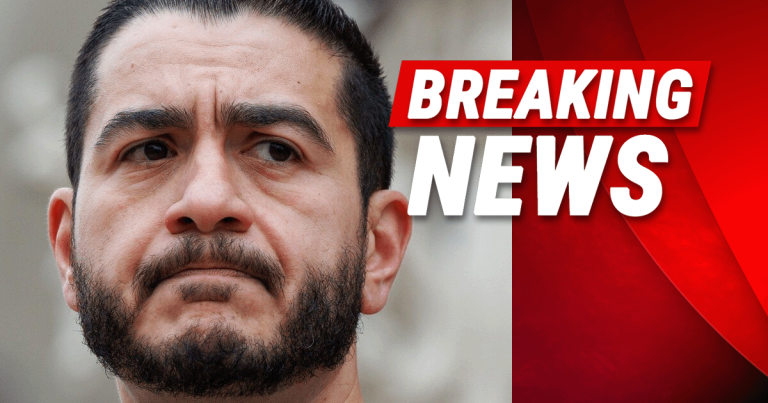
In a June 12 episode of the Head in the Office podcast, Abdul El-Sayed said he was in favor of public ownership of artificial intelligence companies, a position that would give the government and the public a direct stake in privately owned AI firms.
When asked by podcast host if the he would support public ownership models El-Sayed doubled down and said he would support public control of these companies.
So — no ambiguity here. Abdul El-Sayed, the freshly minted Democratic nominee for Michigan’s U.S. Senate seat, isn’t floating reasonable regulation or modest consumer protections. He’s advocating for the government to seize ownership stakes in private companies and dictate how they operate. His words: “I agree that we need public ownership but I also agree we need some system of public control.”
El-Sayed’s platform, wrapped in the friendly branding of “AI Under Democracy,” demands “democratic ownership and governance” of AI technology. The proposal dovetails neatly with Senator Bernie Sanders’ American AI Sovereign Wealth Fund Act, a scheme to strip equity from private AI firms and funnel it into government-administered coffers. El-Sayed has praised Sanders’ approach as “a really good way forward.”
It’s a catastrophically bad idea. Not because artificial intelligence doesn’t raise real questions worth debating — it does. But government seizure of private industry has never delivered on the grand promises its champions make. What it has delivered, without exception, is swollen bureaucracies, crushed innovation, and the quiet, steady erosion of the property rights that form the bedrock of American prosperity.
A socialist by any other name
Now here’s the part that deserves your attention. Despite championing what amounts to textbook socialist industrial policy, El-Sayed swears he’s no socialist. He told CBS News he’s “not DSA” and insists he doesn’t “do ideology.” His preferred self-description? “A capitalist who actually read about capitalism.”
Right. A capitalist who calls for public ownership and public control of private companies. That’s quite the reading list.
El-Sayed can dodge the label all he wants, but the American public has a pretty sharp nose for repackaged socialism. A recent Marquette Law School poll pegged the Democratic Socialists of America at a brutal -30 net favorability — 54 percent of respondents view the organization unfavorably. Even worse for the El-Sayed wing of the party: an Ipsos–Washington Post survey found that 55 percent of Americans flat-out refuse to consider voting for a democratic socialist. The ideology is toxic at the ballot box, which probably explains the frantic rebranding.
The precedent nobody should ignore
This isn’t some theoretical seminar playing out in a deep-blue congressional district. El-Sayed toppled centrist Representative Haley Stevens in Michigan’s Democratic primary — one of the most fiercely contested Senate races heading into November. He’s part of a broader surge of progressive and socialist-aligned candidates winning primaries from New York to Colorado.
And the precedent his proposal would establish reaches well beyond Silicon Valley. If the federal government can claim ownership stakes in AI companies because the technology is deemed too consequential for free enterprise, what stops a future Congress from applying that same logic to pharmaceuticals? To agriculture? To your small business?
The Fifth Amendment exists for a reason. Property rights aren’t a policy preference. They’re a constitutional guarantee.
Michigan voters face a clear choice this November. On one side stands the free enterprise system that built the most innovative economy in human history. On the other, a candidate who believes the government should own and control the companies that drive it. El-Sayed may refuse to call himself a socialist, but his platform speaks plainly enough for anyone willing to listen.
Key Takeaways
- Michigan Senate nominee Abdul El-Sayed wants government ownership and control of private AI companies.
- His proposal mirrors Bernie Sanders’ plan to transfer private corporate equity into government hands.
- Polls show 55 percent of Americans refuse to vote for candidates pushing socialist-style platforms.
- If government can seize AI companies, no private industry is safe from political control.
Sources: The Post Millennial, Newsweek