For 45 years, the mullahs in Tehran have ruled through fear, fanaticism, and foreign meddling. They survived sanctions, protests, and international isolation by convincing their people — and themselves — that the Islamic Republic was eternal. Funny how that works out.
Iran’s economy is in freefall. The rial has collapsed by 40 percent since Israel’s devastating June strikes on the regime’s nuclear facilities and air defenses. Rolling blackouts darken cities. Water shortages plague the provinces. And in the streets, from Tehran’s Grand Bazaar to Kurdish villages in the northwest, Iranians are chanting what was once unthinkable: “Death to the Dictator.”
Protests have now spread to all 31 provinces. The regime has responded with its usual playbook — internet blackouts, mass arrests, and bullets. Reports suggest more than 200 dead in Tehran alone, most from live ammunition. The ayatollahs are doing what they’ve always done. But here’s the thing — when has that ever ended well for dictators?
But here’s what keeps me watching this story: the men with the guns are starting to waver.
The cracks within
The real story isn’t the protesters in the streets. It’s the quiet conversations happening inside military barracks across Iran. Authoritarian regimes don’t fall because crowds gather — they fall when the security forces decide they should.
From The Hill:
“Authoritarian regimes that rule by force fall when the people with guns decide they should. The public provides courage, legitimacy, and images for history, but the decisive lever tends to sit inside the security establishment. The fate of Iran will ultimately turn on how many officers conclude that the status quo has become more dangerous — for the state and for themselves — than abandoning it.”
Read that again. This isn’t about hashtags or viral videos. It’s about generals doing math.
Iran’s coercive apparatus rests on two pillars: the Islamic Revolutionary Guard Corps, the ideological enforcers bound to the regime’s survival, and the Artesh, the traditional national military rooted in defending the state rather than the clerics. For decades, these institutions operated in uneasy partnership. The IRGC handled repression; the Artesh stayed quiet.
That arrangement is fracturing. One riot police officer in a Kurdish city told reporters there’s “100 percent confusion” within his ranks. “I know all the officers in my station,” he said, “and they believe the regime is collapsing.” When your own enforcers are whispering that the jig is up, you’ve got problems.
History offers a roadmap. Romania’s Ceausescu fell in 1989 not because of the crowds in Bucharest, but because generals stopped shooting. Egypt’s Mubarak was finished the moment military leadership decided he was more dangerous to their interests than removing him. And according to Western intelligence assessments, Khamenei has a contingency escape plan to Moscow — the same path Syria’s Assad took. Think the ayatollah hasn’t noticed the pattern?
A new dawn?
The 86-year-old supreme leader has no credible successor. His son Mojtaba is despised. The clerical establishment is fractured and aging. Meanwhile, protesters are invoking Reza Pahlavi, the exiled son of the Shah, chanting that he will return.
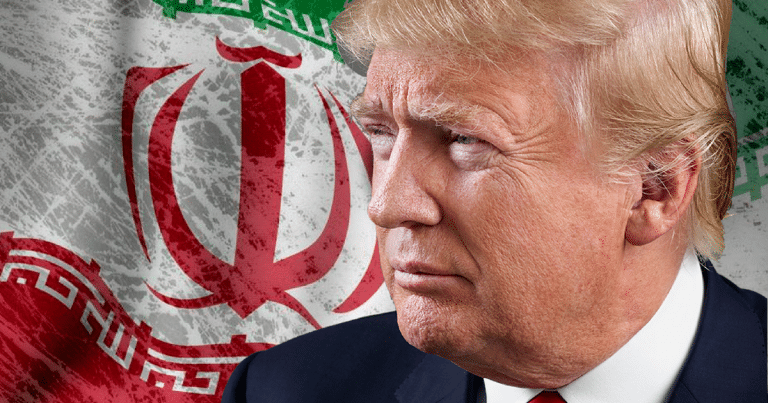
Here’s what drives the foreign policy establishment crazy: Trump understood something they never could. His “locked and loaded” warning wasn’t bluster — it was a message to Iranian officers weighing their futures. Maximum pressure worked. I know we’re not supposed to say that out loud in polite company, but there it is. Israeli strikes exposed the regime’s impotence. The theocracy that once terrorized the region through Hezbollah, the Houthis, and Iraqi militias is teetering.
If Iran falls and responsible leadership emerges, we could witness something remarkable — the dawn of a more peaceful Middle East, built not on appeasement but on clarity and resolve.
Seriously — give the man his Nobel already. He’s earned it.
Key Takeaways
- Iran’s regime is at its weakest point since the 1979 revolution, with economic collapse and military uncertainty threatening its survival.
- The fate of the theocracy hinges not on protesters, but on whether security forces decide to stop defending the regime.
- Intelligence reports suggest Khamenei has prepared a contingency escape plan to Moscow — following Assad’s playbook.
- Trump’s maximum pressure strategy and Israeli military strikes have exposed the regime’s impotence and emboldened the Iranian people.
Sources: The Hill, TIME, HORN REVIEW