Wars are measured in territory seized and soldiers lost. But their deepest wounds are counted in families torn apart – mothers who don’t know where their children sleep at night, fathers who can’t find their sons. Since Russia’s invasion of Ukraine in 2022, more than 35,000 children have been kidnapped from their homes and relocated to Russian-held territory, according to Yale’s Humanitarian Research Lab. Thirty-five thousand. Let that number settle.
The international community has wrung its hands. The United Nations has issued statements. Professional diplomats have shuttled between capitals producing communiqués dense with jargon and thin on results. And what exactly did any of that accomplish? Meanwhile, in places like Oleshky, families were reduced to boiling garden weeds just to survive, cut off from food, medicine, and hope by a grinding siege.
And yet, quietly – without fanfare, without press conferences, without a single self-congratulatory post – someone was working the back channels. I’ll admit, this one caught me off guard in the best way.
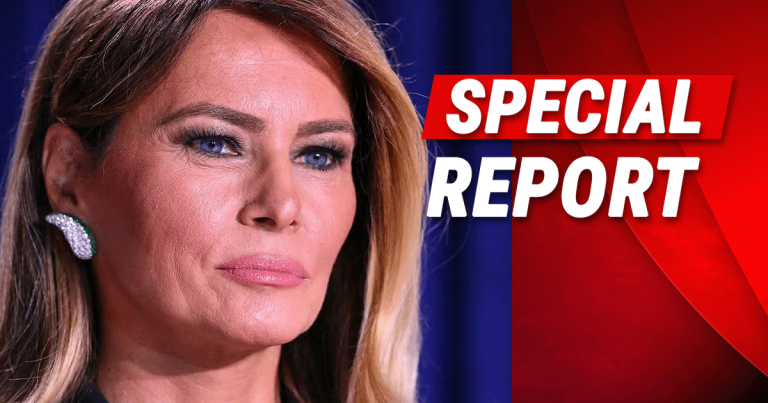
On Wednesday, First Lady Melania Trump announced that nine more children displaced by the war have been reunited with their families, bringing the total she has personally facilitated to 43 since October 2025. This marks her seventh reunification operation, achieved with the full cooperation of both Russian and Ukrainian leaders.
From the White House:
“We can heal the world through peace, and peace begins with our children. Every child reunited with their parents brings humanity one step closer to a better world for everyone. Children in this region of the world, like children everywhere, cannot possibly understand why geography and government have put them into the horrors of war.”
What strikes me is the method. No billion-dollar aid packages, no sprawling bureaucratic apparatus. Melania tapped her adviser Marc Beckman to maintain “nonstop” contact with both sides – persistent, principled engagement aimed at the most vulnerable people in any conflict: the children caught in the middle of it.
“She does better than our professionals”
That was President Trump’s assessment of his wife after she secured a localized ceasefire in Oleshky last month – a six-day pause that allowed humanitarian aid to pour into the besieged city and enabled roughly 800 civilians to evacuate safely. Hard to argue with that assessment. The ceasefire came alongside parallel appeals from Pope Leo XIV to Putin, placing Melania’s moral authority in remarkably elevated company.
While the broader peace negotiations led by Steve Witkoff and Jared Kushner continue without a final deal, the First Lady’s efforts represent something rarer than a signed agreement: tangible, human results.
What quiet conviction looks like
Look, have you seen this story covered on the evening news? No? Funny how that works. But let me say this plainly: there’s something deeply resonant here for anyone who believes the family is civilization’s bedrock. Reuniting a child with a parent isn’t a policy position. It’s a moral one. Call me old-fashioned, but it shouldn’t require an ideology – just a conscience.
Forty-three is a small number against thirty-five thousand. Melania Trump knows that better than her critics do. But each of those forty-three is a family made whole – a child who will sleep tonight under the same roof as the people who love them most.
The work isn’t finished. She knows that, too.
Key Takeaways
- Melania Trump has quietly reunited 43 children with their families amid the Russia-Ukraine war.
- Her behind-the-scenes diplomacy achieved results where international institutions failed.
- The Oleshky ceasefire saved roughly 800 lives and delivered critical humanitarian aid.
- Family reunification isn’t a policy debate – it’s a moral imperative rooted in timeless values.
Sources: The White House, New York Post