
A generation ago, parents worried about what their kids encountered on the walk home from school. Now the threat doesn’t even require them to leave the couch. Social media platforms — designed by engineers who won’t let their own children use the products — have burrowed into the daily lives of American kids with surgical precision. These aren’t neutral tools. They’re attention-harvesting machines, and the youngest users are the richest crop.
Here’s what makes it particularly galling. The companies behind these platforms don’t just tolerate the damage — they disguise it. They slap “family-friendly” labels on digital environments saturated with content no responsible parent would approve of, then hide behind terms of service written by armies of lawyers. Parents and grandparents trusting those app store ratings? They’ve been played. And the corporations pocketing the profits are banking on nobody calling them out.
Somebody finally did.
From The Post Millennial:
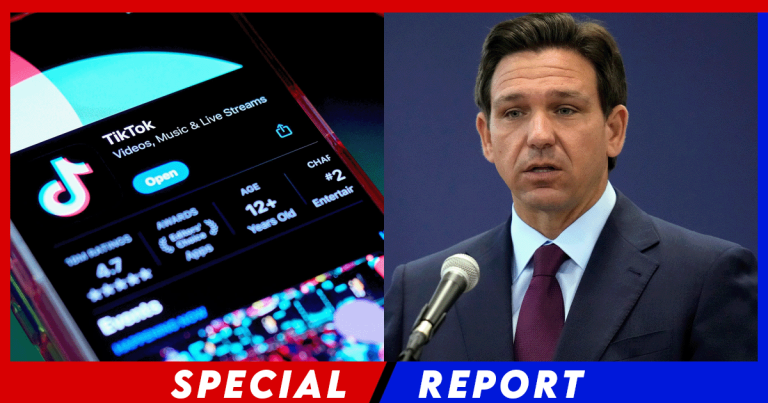
Florida Attorney General James Uthmeier filed a lawsuit against TikTok on Monday, accusing the social media platform of violating state law by allowing children under 14 to create accounts and exposing young users to harmful content.
The lawsuit, filed in St. Lucie County, seeks financial damages and a court order requiring TikTok to comply with social media restrictions in Florida.
The suit targets violations of Florida’s House Bill 3, which took effect in January 2025. The law is about as straightforward as legislation gets: no social media accounts for children under 14, and parental consent required for anyone under 16. You’d think a multi-billion-dollar company could manage that much.
TikTok apparently couldn’t be bothered. According to the complaint, the platform knowingly allowed underage children to create accounts in direct violation of the statute. Teenagers aged 15 and 16 were permitted to sign up without a shred of parental involvement. When confronted, TikTok offered the corporate equivalent of a shrug, saying it was “evaluating the state’s complaint” and touting its “strong record on minor safety.”
Spare us.
Selling poison and calling it candy
The most damning allegation isn’t merely that TikTok broke the law — it’s the sheer audacity of the coverup. In its app store listings, TikTok describes content involving sexual themes, drug use, profanity, self-harm, suicide, and eating disorders as “mild” and “infrequent.” Let that sink in for a moment. Sexual content and suicide material — mild and infrequent.
Florida officials say that characterization is flatly, demonstrably false. Such content appears frequently and in graphic detail. This isn’t a technicality or a gray area. It’s consumer fraud — a direct violation of Florida’s Deceptive and Unfair Trade Practices Act.
AG Uthmeier was blunt: “TikTok’s success hinges on its ability to addict children and teenagers to the platform.”
He continued: “TikTok knowingly deceives parents and allows children to be exposed to harmful and inappropriate content in direct violation of Florida law. We have zero tolerance for companies that prioritize profit over children’s safety.”
State officials say TikTok has known internally about potential harms to children for years and chose revenue over responsibility every single time. That’s not negligence. That’s a business model — one wrapped in TikTok’s carefully curated image as a progressive, socially conscious platform. Funny how that social consciousness evaporates when kids’ mental health collides with quarterly earnings.
Florida leads where Washington lags
Florida isn’t alone in this fight, but it’s out front. More than two dozen state attorneys general have filed lawsuits against TikTok, and Florida has also aimed at Snapchat for similar offenses. Earlier this year, a California jury found Meta and Google negligent in a case brought by a woman who became addicted to social media as a child. TikTok quietly settled its portion before trial. Not exactly the move of a company confident in that “strong record.”
State Rep. Chip LaMarca captured the broader stakes: “The State of Florida stands with families in protecting our children from the abuses of addictive social media apps.”
A federal judge previously attempted to block H.B. 3 on First Amendment grounds, but that ruling has been paused while the state appeals. The law stands — and TikTok stands accused.
The real bottom line
Conservative governance has always understood that liberty without responsibility is anarchy. Free markets don’t permit corporations to exploit children. Florida is demonstrating that a state willing to fight for families can force even the largest tech giants to answer for their conduct.
TikTok — and its Chinese parent company ByteDance — should pay close attention. American parents, backed by American law, are done being deceived.
Key Takeaways
- Florida’s AG sued TikTok for illegally allowing children under 14 to create accounts.
- TikTok deliberately mislabeled graphic content as “mild” to deceive parents.
- More than two dozen states are now holding Big Tech accountable for child safety.
- Conservative governance is proving that protecting families and defending free markets aren’t mutually exclusive.
Sources: The Post Millennial, FOX 13 Tampa Bay